Aug. 8, 2016 Please pitch in to add your data/case studies from VR pain management to VR for psychiatric use and more…
…Currently working on an update about positive media innovation including tips/tactics for the “sandwich generation” of parents providing eldercare and am thrilled to see virtual reality being tested in senior living communities among startups like Rendever Health as well as VR empathy training for health care staffers to help young doctors relate via immersive experiences at Embodied Labs.
With the Aug. 23-24, 2016 Health Further Summit upcoming, I’m hoping there will also be buzz-worthy reveals of media companies using simulations and VR to help caregivers deal with prickly participatory projects, like perhaps a “When to give up the car keys” show and tell too?! (similar to the teens texting/driving multitasking simulator which helps users “drive the point home” without heavy handed lectures or combative confrontations)
From augmented reality (AR) like Pokemon Go used for public health to dementia care creativity, such as revisiting eras, neighborhoods, and memories for patients, the positive options astound…Please keep me apprised of which innovation startups are using VR (and AR/AI) in the most promising ways! Just leave a note in the comments or ping me on Twitter @ShapingYouth to contribute to the update of this post…
Original Post: May 5, 2009 In part one, I posted an overview of the critical thinking that needs to whonk us up side of the head before we start enabling brands to infiltrate schools, hospitals and institutions of any kind.
In part two here, I’ll back up why I’m sold on the particular merits of virtual worlds ‘boosting fun’ for kids in pediatric hospitals using charity and philanthropic fun to harness every ray of sunshine these kids can muster in order to feel empowered and less helpless.
I’ll use therapeutic data points from other virtual worlds to draw from in instances of lifting spirits for the bed bound too…(please feel free to add your own experiences or send links my way about healthcare educators using same: fill me in!)
In part three, the walls come tumbling down, and I’ll shine the spotlight on the ramifications of larger licensed character or commercial branding and some other ‘what ifs’ to consider with infiltrating health care or school environs.
For example, if über-brands start targeting pediatric wings like the consumer-driven ‘Webkinz’ or Disney’s ‘Club Penguin’ as opposed to charity/community driven ventures or any other ad-free, benign subscription world for fun, you could check in with one disease and check out with another…media-itis!
 Before I put on my “deconstruction diva” chapeau, I’d like to look at some of the other work in virtual worlds that contributed to my thought process on the therapeutic side…
Help me out by holding this up to the sunlight from all angles!
Lots of research data is bubbling up from the annual Games for Health conference from year to year, tracking therapeutic disease management, Wii and hospital use of exergaming, and what they’re calling “rehabitainment” (ouch, who thinks up those names?)
They’ll be hosting an entire day of “virtual worlds and health” the day prior to the summit, and according to gaming gurus at Gamasutra they’re expecting the largest ever turnout, with over 40 discussion areas. These conferences offer several data nuggets that help reinforce my positive POV…for example:
Strokes strike KIDS (as evidenced by the recent SF Chronicle article, and visual at left by Paul Chinn)…even though some have been misdiagnosed due to perception of strokes being a ‘senior’ thing.
The benefits of virtual worlds for stroke victims bodes well for therapeutic use…from techno-advancements like virtual body doubles, as well as rehab and recovery use of video games to improve eyesight with post-stroke return of as much as 90% of vision.
Stacy Fritz, director of the Rehabilitation Laboratory at the University of South Carolina, is studying whether the Wii can help stroke victims too.
“If it does show real benefit it could be a huge asset for rehabilitation and increasing physical activity.” (they received a $200,000 RWJF.org grant, to test this with seniors, and have noted positive results in mobility using the “Wii Fit” balance board, though the study won’t be finished until July 2010)
That said, ‘the real thing’ continues to be superior according to the American Council on Exercise, and I’m behind that 200%.But if getting kids off the couch/hospital bed using Wii as a motivator fills a gap that sedentary kids may respond to over traditional exercise, then use what works, yes? (Or no? Sound off, please!)
Many schools and hospitals have already incorporated exergaming like Dance Dance Revolution (DDR) to shake loose children’s metabolism and boost their physical well-being, particularly with inclimate weather, thwarted mobility or P.E. cutbacks…
Where do virtual worlds fit in?
Seems media producers are finally getting on track to bring significance and meaning to the platform embedding real life cues via adventures… whether it’s financial literacy, eco-literacy, collaborative storytelling (visual at left of freeing cute critters in the Elder Vein mine of now defunct Dizzywood) or testing hospital alliances which seem perfect for bed ridden lil’ beasties needing a smile…virtual reality has a lot to offer in health care.
On the mental health circuit, hospitals and psychologists have used virtual world simulations such as Virtual Iraq and Twin Tower simulations for youth suffering from PTSD to attempt to recover their mindshare from trauma using ‘exposure therapy.’And in the preventive realm, RWJF.org and Teen Second Life are partnering to crowd-source obesity and nutrition solutions…
 RWJF’s Health Games Research recently awarded $2 million in grants to examine the health benefits of video games or ways they can be designed motivate healthy behaviors and promote physical activity…so clearly “Gaming for Good” takes on many faces beyond Elf Island’s virtual use in hospitals…
More examples? Let’s look at the most established virtual world of all…Second Life for its historic therapeutic precedents.

I’m citing their educational advancements and the community and medical therapeutic aspects inside their virtual world which could be ADAPTED to kids virtual worlds like for younger patients. Teen Second Life is a (now defunct) separate grid for ages 13-17 only. Second Life has had remarkable outreach inside their virtual world, from patients in cancer recovery to autism parent support groups. (I’ve sent survivors of the big C in there to check out the dialog, and they’ve reported it’s very accurate, helpful and community driven)
SL has also offered troubled youth, and those with multiple health hardships the healing properties of friendship, via a path of support and bonding through avatars to share their experiences. Even the Center for Disease Control set up shop in SL to test virtual environs and prompt information flow for healthier behavioral outcomes. In fact, Linden Lab gave out $20,000 in prizes to make Second Life projects applicable to the real world:
“Virtual Ability works to help people with disabilities acclimate to and use Second Life. With more and more research showing benefits for disabled users in virtual environments–ranging from physical therapy for burn victims or amputees to mental therapy for PTSD or troubled children–the applications seem particularly useful.”
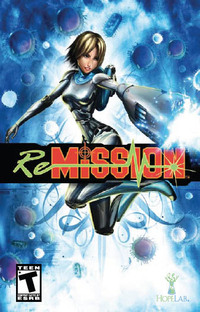 There are ‘serious games initiatives’ that help kids combat helplessness in disease recovery like HopeLab’s fabulous ReMission making cancer not only approachable and understandable, and giving kids an empowering education tool to fight back through hands-on hope and promise.
(OK, I’m not wild about the body image messaging to girls at left, but that’s a different article!)
Then there’s the booming health-gaming genre itself, used for therapeutic or preventive reasons: (HG4H), (Humana Games for Health) Playnormous, ArchImage’s Escape From Diab, Kaiser Health Detective, Gaming4Health arcade, a plethora of new brain fitness and memory enhancers for stroke, and the whole physical play movement such as the Ruckus Nation HopeLab contest I wrote about crowd-sourcing cool ways to get kids moving…
This all takes me back to my post about Shaping Youth representing a metronome in motion, looking at each individual scenario from a pro and con benefit analysis basis…
Is it okay for certain brands and health entities to be used in schools and hospitals if they’re ‘doing good things’ and seeding positive cues via new media in engaging formats with therapeutic benefit?
Or are these institutions (schools & hospitals) the last bastion of “brand creep” being hit by a very sophisticated ‘work around’ under the guise of fitness and obesity intervention?
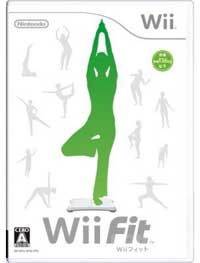 Consider:
Wii Fit is made by Nintendo, opening up the whole console/gaming platform discussion, to Wii Sports vs. real sports in the open air…
DDR is made by Konami, which has enjoyed considerable offshoots from its success including ‘brand creep’ via DDR Disney mix and other cross-pollinating on different platforms like PlayStation and Game Boy…Since I’ve made no bones about my preference for REAL life over virtual life, it begs the question:
Where does therapeutic health and well-being stop and branding influence begin?
Are we ‘seeding’ screen time or are we utilizing new media tools for positive change and alternative choice?
Are there NEW risks to consider (e.g. addiction, gaming preference, isolation) or do the psychosocial benefits outweigh the institutional uses within hospitals and schools?
As Marshall McCluhan would say,
“Is it the medium or the message?”
Sound off with your views, as we tackle the ‘what ifs’ to consider in part three, tomorrow…
For more worthy picks in Health Care media, check out The Health Care Blog, with an info-laden sidebar along with the latest and greatest pragmatic updates…
Health happenings from TCHB’s reading list include:
- WSJ.com Health Blog
- NYT.com Well
- iHealthbeat
- California Healthline
- Pharmalot
- Gooz News
- The Business Word
- Kaiser Network
- Stateline
- Healthcare Finance News
- Health in 3.0
Andre Blackman at Pulse and Signal is my personal ”go to guy’ for literally keeping his finger on the heart of new media advancements and thinking ‘out of the box’ to reform our health care system in positive new ways.
He was just interviewed in a good piece on what he’s up to in the health care community on BlackWeb2.0 here and can be found ‘Tweeting’ on health topics impacting kids regularly at Mind of Andre…And his blog list is worthy of perusal when you want a decidedly Health 2.0 approach to new media and mobile technology use.
Here are just a few of his picks under ONE category…I can’t wait to have him weigh in on the pros and cons of virtual worlds in hospital settings!
Health + Innovation
Craig Lefebvre’s On Social Marketing
Emerging Technologies Librarian





Amy! You know this is the kind of the stuff that gets me going. Before I forget, I am co-authoring a new blog from the people at Playnormous, called HealthGamers.com – hoping this will be a great resource for the healthy gaming world. Not exactly sure I can make the Games for Health conference, although you know I want to be there.
I’m going to be at the CDC’s Health Communication, Marketing and Media conference in August though. Thanks as usual for the shout out! I have to give you a call sometime, things circling my brain!
As always, you offer some great insights. One of my key learnings from Dizzywood’s involvement with the schools, was that virtual worlds also offer “health” benefits to kids with learning disabilities, such as autism. One teacher’s observation was that the kids with autism found it much easier to express themselves — and in some cases, learn online. As a result, their self-esteemed improved offline. Was it because virtual worlds allow children to be themselves — without the pre-disposed stigmas? I don’t have an answer, but I have always felt that in addition to virtual worlds offering an important outlet to children with physical ailments (which, as you mentioned in your previous post, I’ve experienced first-hand with my daughter), virtual worlds may also offer profound benefits for children suffering from other types of disabilities.
Ah, two of my favorite folks first up in the comments, woohoo! Andre, you’ve got my number, call anytime, and I know you’re at Health 2.0 now, so would love a recap on that too…
Kirsten, as always, great insight, and yes, I’ve read much about autism and anonymity within virtual worlds opening up natural strengths and skill sets while breaking down barriers feeling ‘free to be, you and me’ (wasn’t that a Marlo Thomas book in the 70s?) 😉
Thanks for your feedback…Interesting that neither of you touched the topic of commercialism and ‘potential ad creep’ so I guess I’ll wait til ‘part three’ tmrw. to solicit your views on protocol and pragmatics!
Appreciate you both taking the time to land a note…I know many have shortened to ‘status lines, Twitter and microblogs’ so we’ll no doubt be following suit in order to keep up with volume…and begin some new formats soon. (leaving the heavy analysis for once a week perhaps…) Opinion?
Amy Jussel’s last blog post..Therapeutic Impacts of Virtual Worlds: Using New Media Positively
Amy,
First let me just say that you are amazing! I always know where to go when I want the FULL scoop.
And now to answer your question about “brand creep”… yes, I do agree that (in your words) “these institutions (schools & hospitals) are the last bastion being hit by a very sophisticated ‘work around’ under the guise of fitness and obesity intervention.” Still, I always maintain that there’s a right way to market to kids– and a zillion ways that companies can screw it up. The hospital market is particularly insidious because the kids and parents are already so vulnerable… then again, nobody seems to have a problem with commercial TV in the waiting and hospital rooms or overabundance of licensed merchandise in the gift shops. It’s a complicated issue and it’s hard for me to summarize except to say that it always depends on the audience and the product. When brands are well matched with their specific target audiences and everyone involved in the partnership is really, truly doing good things for kids, it can be a wonderful thing.
Oh, and yes, I’ll be at Ypulse in June and am very much looking forward to meeting you in person at the event!
Best,
Allison
Allison Ellis’s last blog post..Butting in on the Burger King-SpongeBob ad campaign debate
Hi Allison, I was hoping you’d weigh in, here! 😉
Agree that the hospital market has an extra accountability/ vulnerability/responsibility element in play, just as the “Care Credit” style of “zero% financing for a ltd. period” loans sound ultra-appealing to students and strapped/vulnerable medical emergencies not covered by insurance. (e.g. vet/animal care, dental or dermatological treatment outside of basic coverage, etc.)
I DO believe there is a place for marketing to ‘do good’ and leverage branding toward positive means (even to kids) and on this point I differ w/my colleagues at CCFC etc. For example, I LOVE the fact that Disneynature followed through with their Nature Conservancy commitment of 2.7 million trees being planted in the Atlantic Forest which many cynical folks said would be ‘untrackable’ and hard to ‘monitor’…
http://www.treehugger.com/files/2009/04/disneynature-makes-good-on-tree-planting-marketing-ploy-by-partnering-with-nature-conservancy.php?daylife=1&dcitc=daylife-article
In fact, I’m doing a post on it right now… and including the other cool partnering mobile app along these lines about the iPhorest app for the iphone, with the Conservation Fund and EcoLife apparel…so clearly it CAN and SHOULD be done in a pro-social common sense kind of way. (well, again, some colleagues will argue with that, but S.Y. is crystal clear on the desire, nay, NEED for cross-pollination to create sustainability, economically and otherwise, so yes, I DO agree it CAN work…)
I’ll look for you at the Ypulse extravaganza…I’ll be in the minority there for sure in terms of finding that ‘benign’ fit, but would welcome any thoughts you might have along those lines…(organic, healthy, clean/green scene, etc.) Hard to find the proper alliances that don’t have hands in other things here…and I’m small enough to ‘pick and choose’ carefully rather than ‘go for the gusto’ and feel icky about any multinational backwash…
On a local scale, for example, I’m a huge fan of Green Zebra, local savings for sustainability (eco-coupons for shopping w/conscience) putting purchase power where our hearts are.
That’s what I’m seeking. Know of any good databases filtering same? I’m looking at Xander’s company from Demo ’09 on this…
Awesome writing on your posts and I love reading them. Thanks so much for providing me with this quality content at no cost!
Salut chers lecteurs quel est votre avis de mon nouveau blog sur le diagnostic immobilier?